BY SOFIE MULLIGAN
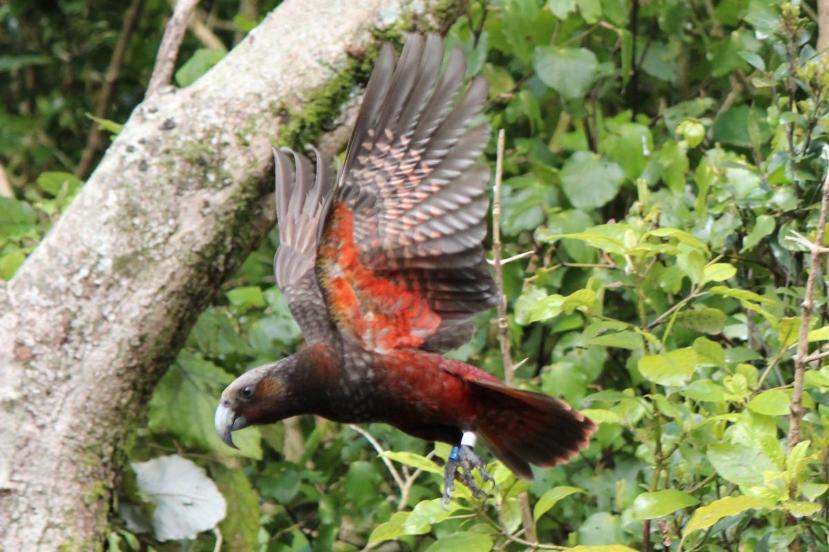
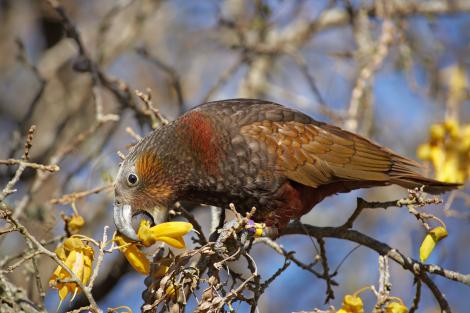
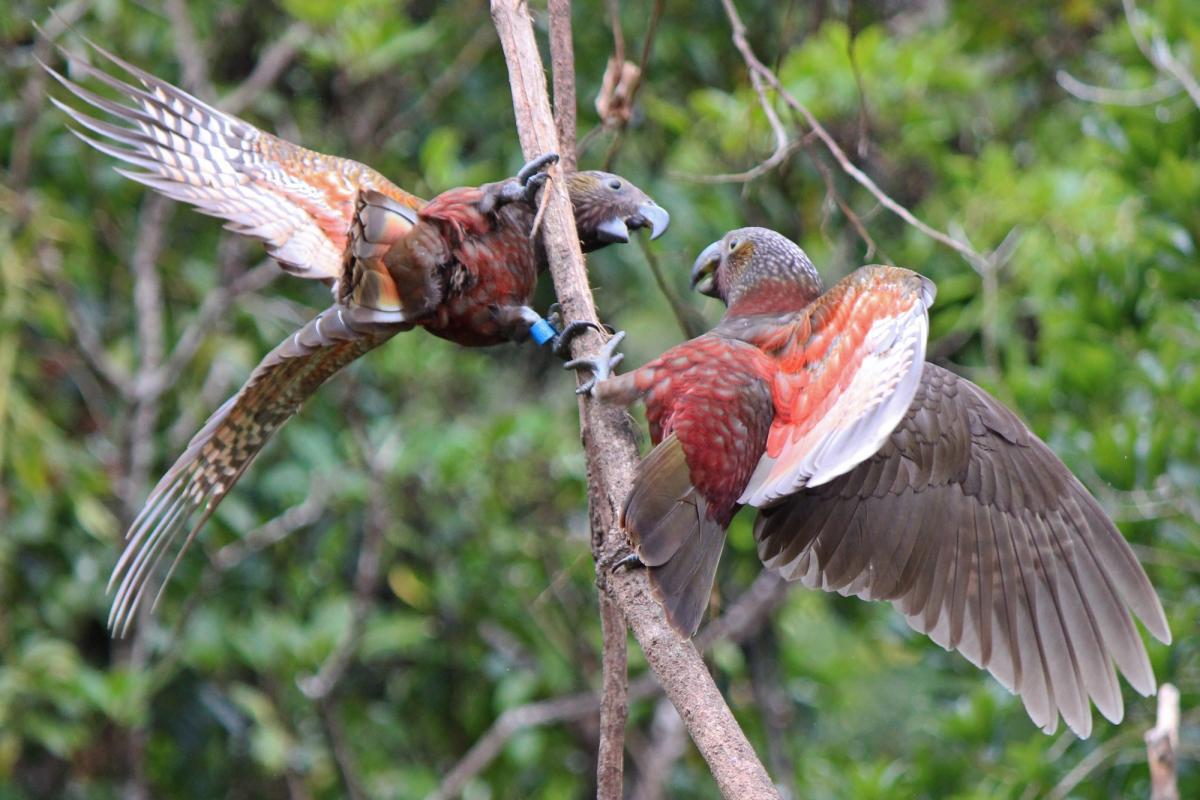
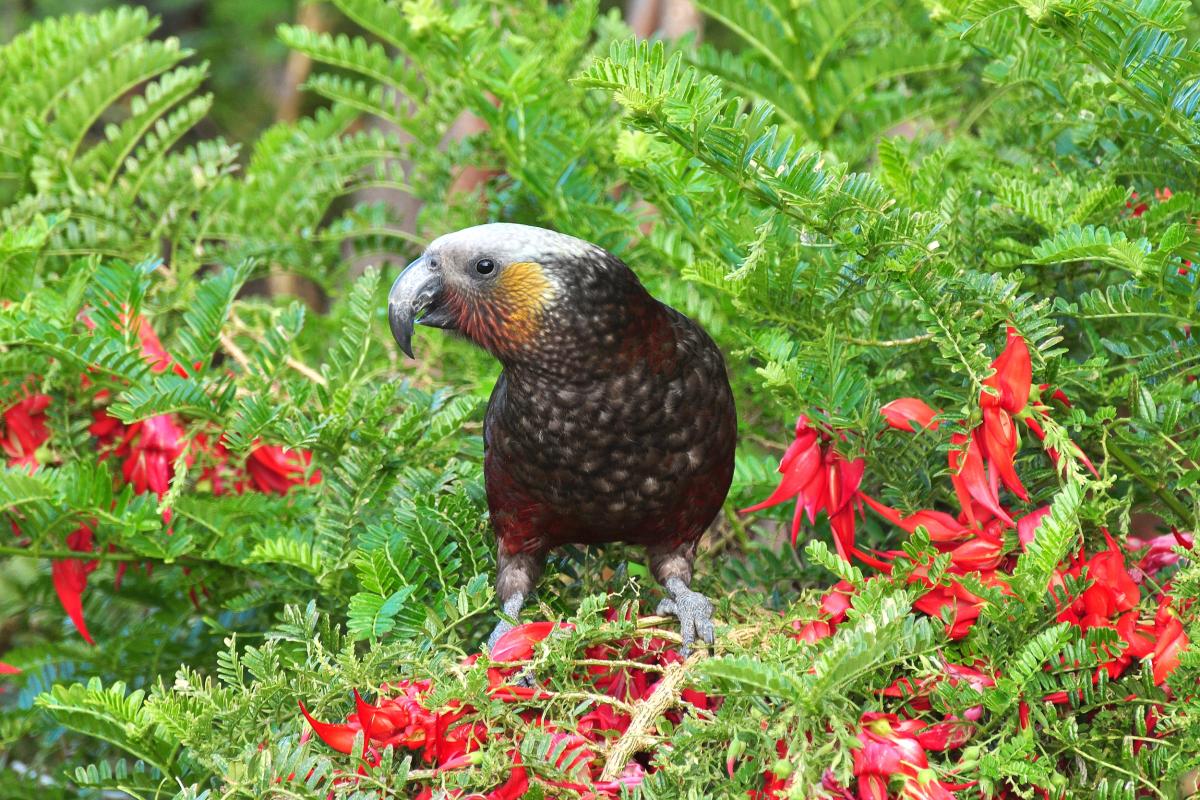
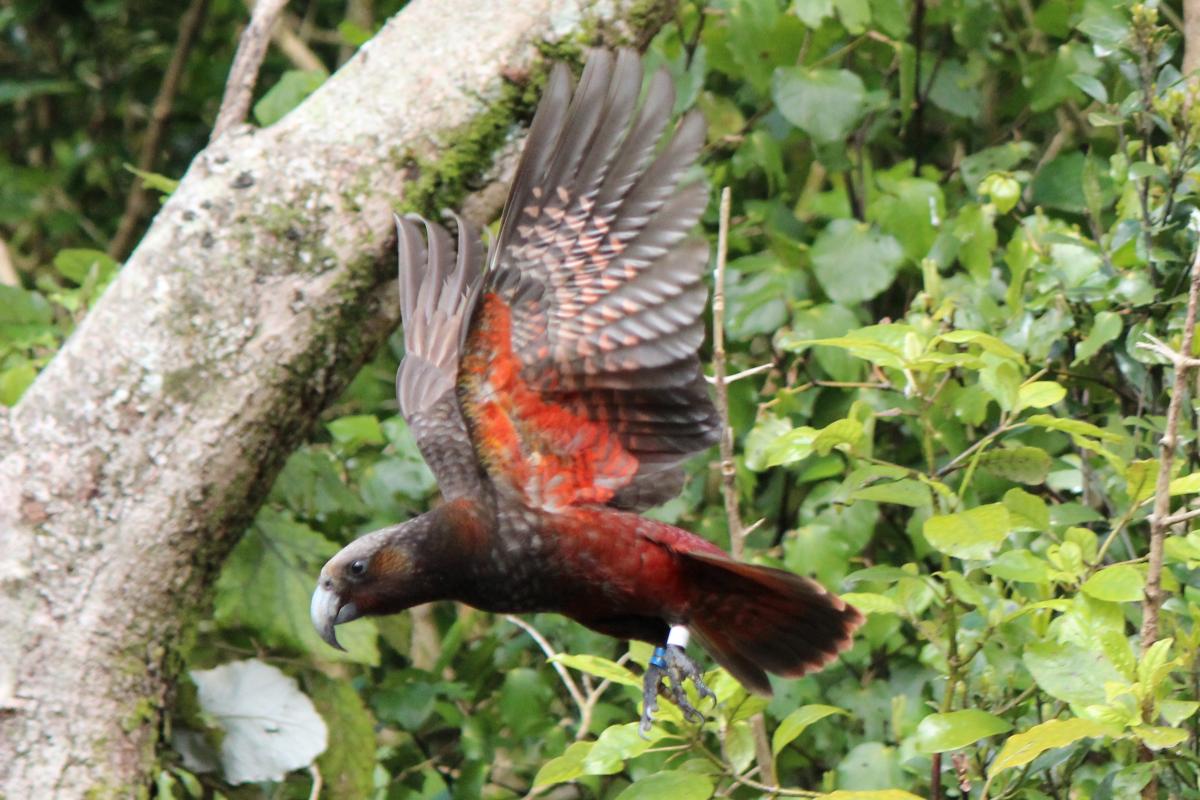
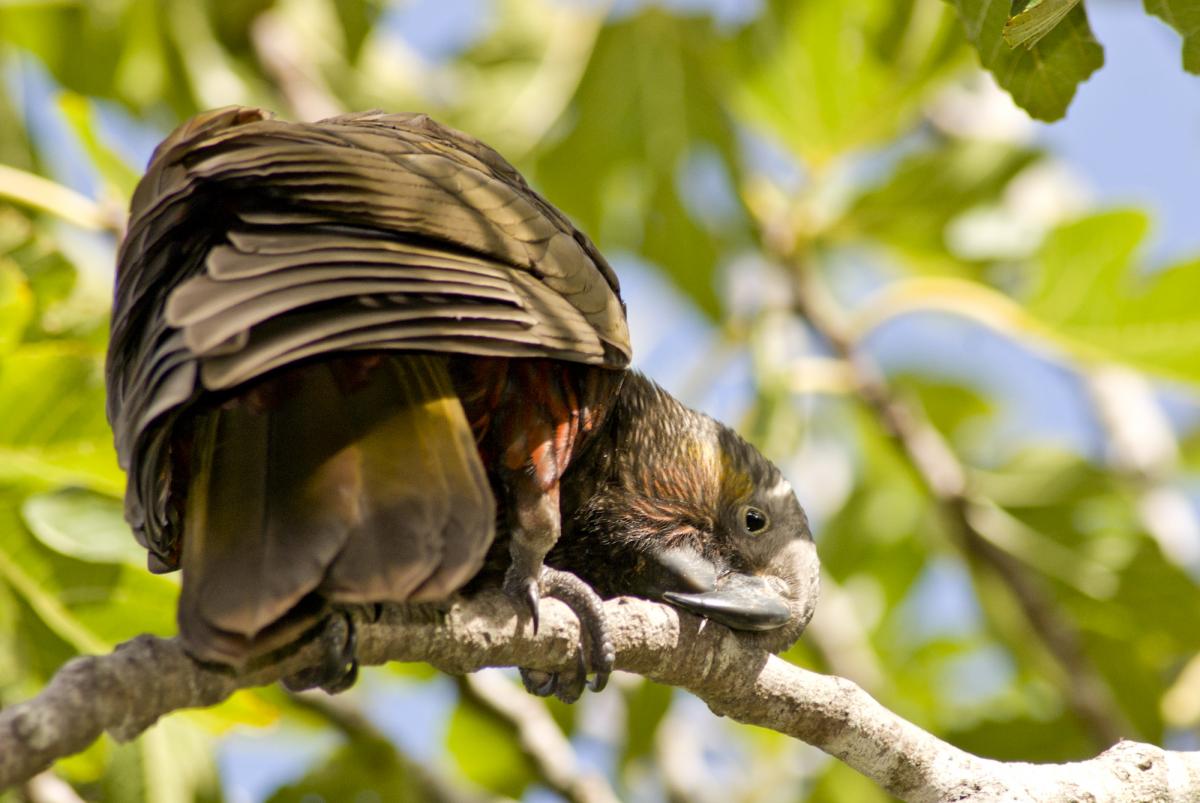
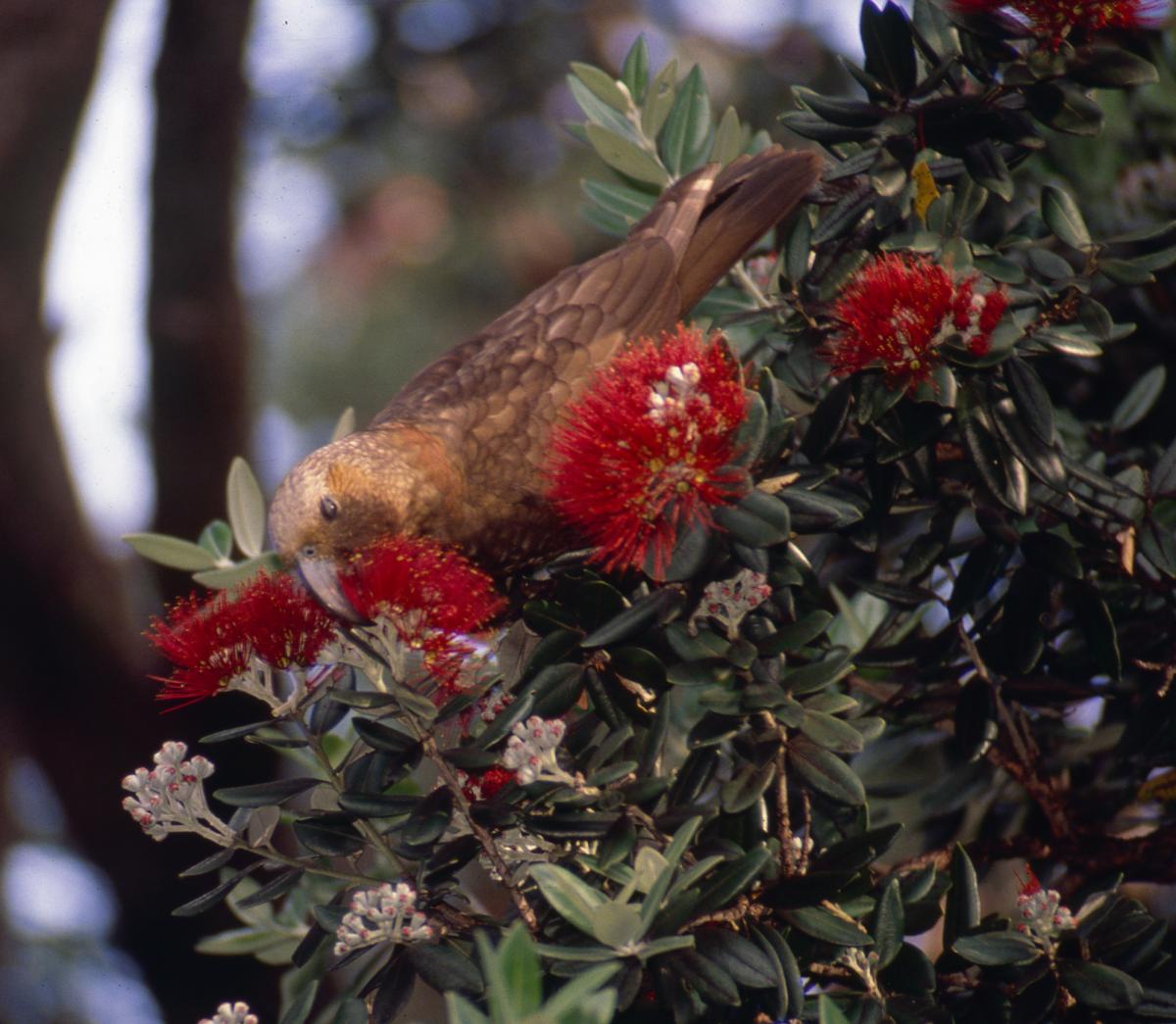
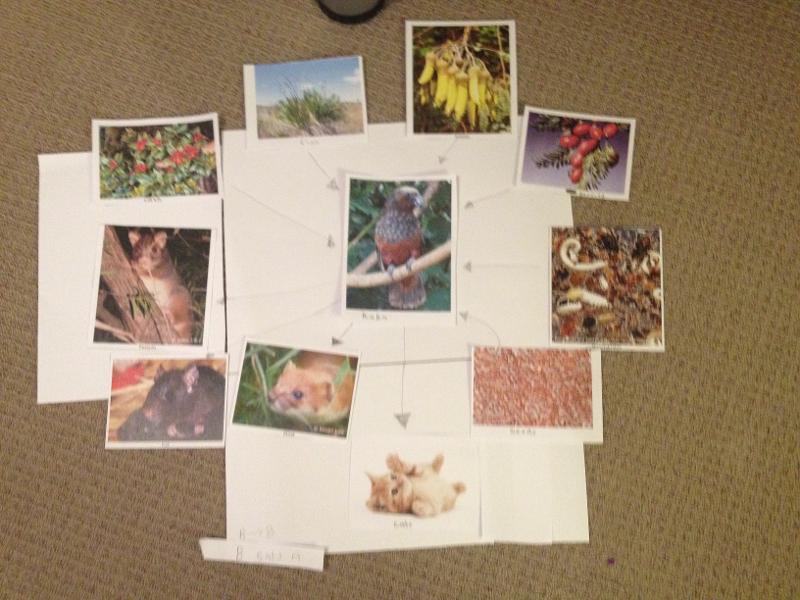
The kaka (Nestor meridionalis) (the Maori name is "kākā") is endemic to the native forests of New Zealand and can be found there or at captivity programs in sanctuaries like Sanctuary Mountain Maungatautari.The Kaka has an olive brown body and a deep orange patch under their wings and a crimson stomach, the kaka looks similar to the Kea. Kaka feed on a variety of foods including seeds, berries, flax, grubs (invertebrates) and the nectar of kowhai and rātā trees. Like other animals the Kaka has adaptions that help it survive an example is a brush tongue that helps it get nectar from flowers. A strong beak that helps them to climb trees and that enables them to crack open the hard cones off Kauri trees so they can get the seeds from inside them. Strong claws and feet that they use extensively. One of the biggest uses is, using one claw to hold on to a tree branch then using the other to stretch out and grab food this is helpful as they live in forests with lots of trees. The Kaka can also camouflage with its environment and hide from predators, however this adaption doesn’t help if predators hunt by smell like introduced species. Kākās’ nest in hollow trees and the chicks leave the nest before they can fly. This means they are on the forest floor which makes them very vulnerable, and can make Kaka unprotected from introduced species. Kakas' have long nesting periods (24 days incubation and 10 weeks in the nest as chicks) and the chicks are unsafe from predators for a long time. Predators who hunt by smell can find Kaka nests easily as they are strong smelling, predators who hunt by sight can also find Kaka nests easily as they are very visible. The Kakas’ main introduced species problem is with rats (threat: rob nests), stoats (threat: kill adults and chicks), feral cats (threat: eat chicks and adults), wasps (common wasp threat: compete for food) and possums (threat: rob nests and compete for food).
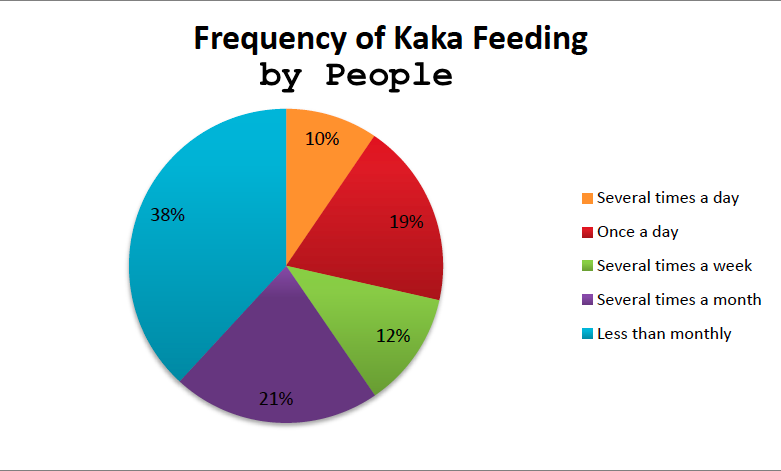
The main threats to the Kaka is their habitat loss, competition for food from introduced animals, predation from introduced species. Human activity has caused all of theses threats to happen. Humans have logged all but a fraction of Kakas' habitat, humans have introduced species that have hunted them and eaten their food. Humans have also introduced themselves into the Kaka environment and have been feeding the Kaka food which is not good for their digestive system and has caused bone deformity and chicks that don't develop.
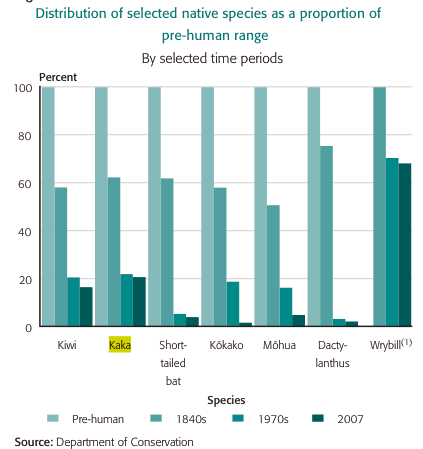
It is important that we look after the Kaka and help it survive because there are only 250 and 1000 mature Kaka left in the world.

Sanctuary Mountain Maungatautari
Sanctuary Mountain Maungatautari started when a large number of conservationists of the Maungatautari community decided to protect plant and animal species that live in Maungatautari. Maungatautari Mountain was made into a reserve in 1912 after a wildlife service survey found the forest to be a very important place for animals and plants. After nearly 100 years of being a reserve another survey was carried out and found most people were in favour of building a pest-proof fence and making Maungatautari accessible for visitors. A year later, Sanctuary Mountain Maungatautari was formed. Now Sanctuary Mountain Maungatautari is committed to helping endangered species grow their population size. With it's public access and open doors to volunteers Sanctuary Mountain Maungatautari educates people on how important it is to save animals and plants from extinction, making a good example itself.
Kaka programs
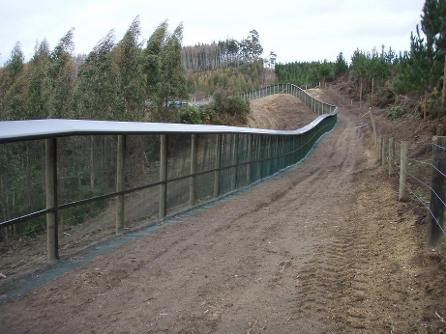
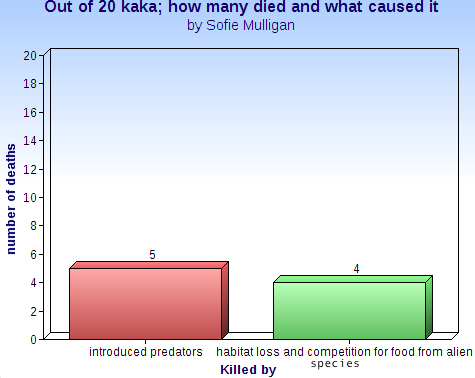
Sanctuary Mountain Maungatautari are helping keep the Kaka from extinction. The Sanctuary run a program that breed kaka (with the first recorded breeding in 2010) and is the only one in the central Waikato. Introduced pedators are one of the main reasons that Kaka are classified as "Nationally vulnerable", five out of 20 birds where killed in one season thanks to alien predators, Sanctuary Mountain Maungatautari has one of the longest pest proof fences in the world. This keeps predators outside and Kaka safe. Kaka wander large distances from their breeding site in the winter, Sanctuary Mountain Maungatautari hope that these excursions will lead genetic interchange between captive populations and wild populations. Sanctuary Mountain Maungatautari's goal is to build up a strong kaka population, this will be very valuable for their national conservation. If this happens the population might even overflow into the surrounding suitable habitat outside the mountain.
Who are Sanctuary Mountain Maungatautari
Sanctuary Mountain Maungatautari has ten full time staff and four contractors working there currently. Volunteers are a big part of Sanctuary Mountain Maungatautari, 400 active volunteers regularly contribute their time to Sanctuary Mountain Maungatautari. Jobs that volunteers take up are, monitoring, maintenance of tracks and tracking lines, monitoring the health and growth of various wildlife species and weeding. Sanctuary Mountain Maungatautari praise volunteers by saying "Our projects simply could not succeed without them" (quoted from Sanctuary Mountain Maungatautari website).
Sanctuary Mountain Maungatautari have more than 2,600 supporters who contribute with by volunteering or financial assistance with continual donations, one-off donations or sponsorships - offering free or discounted goods or services.
Sanctuary Mountain Maungatautari is doing a good job of looking after Kaka, my research has shown me the problems and hardships the Kaka face and how Sanctuary Mountain Maungatautari is working on fixing these problems in their sanctuary. An example is most of the Kakas' habitat has been logged, Sanctuary Mountain Maungatautari is giving the Kaka a safe habitat were they can stay and be looked after.
Example of supporters
click on photos to see full view
Pest proof fence
Definitions:
Native- an animal or plant that comes from a specific place (the Kaka is native)
Introduced/ exotic/ alien- an animal or plant that has come from another place
Endemic- only found in a specific place (the Kaka is endemic )
Endangered- a species at risk of extinction
Nationally vulnerable - species also have between 250 and 1000 mature individuals in existence but their populations are increasing.
Food Web
scale: A ---> B = A - what is being eaten B- what id doing the eating
Graph about how many times human feed Kaka
Kaka population over time
Bibliography
From the http://www.sanctuarymountain.co.nz
- What Sanctuary Mountain Maungatautari are about
- Who Sanctuary Mountain Maungatautari Supporters are
- Their Staff
- What is being done for the Kaka at the sanctuary and where it is located.
From http://en.wikipedia.org/wiki/New_Zealand_kaka
- Scientific classification
- Scientific name
From http://www.doc.govt.nz/conservation/native-animals/birds/birds-a-z/kaka/
- Information in the first paragraph about the Kaka
- Information to make the graphs
- The population graph
From http://nzbirdsonline.org.nz/species/kaka
- What Kaka look like
- Images
I choose to use the websites I did because they were easy to use, gave me the information I required and were at the top of the search engine.
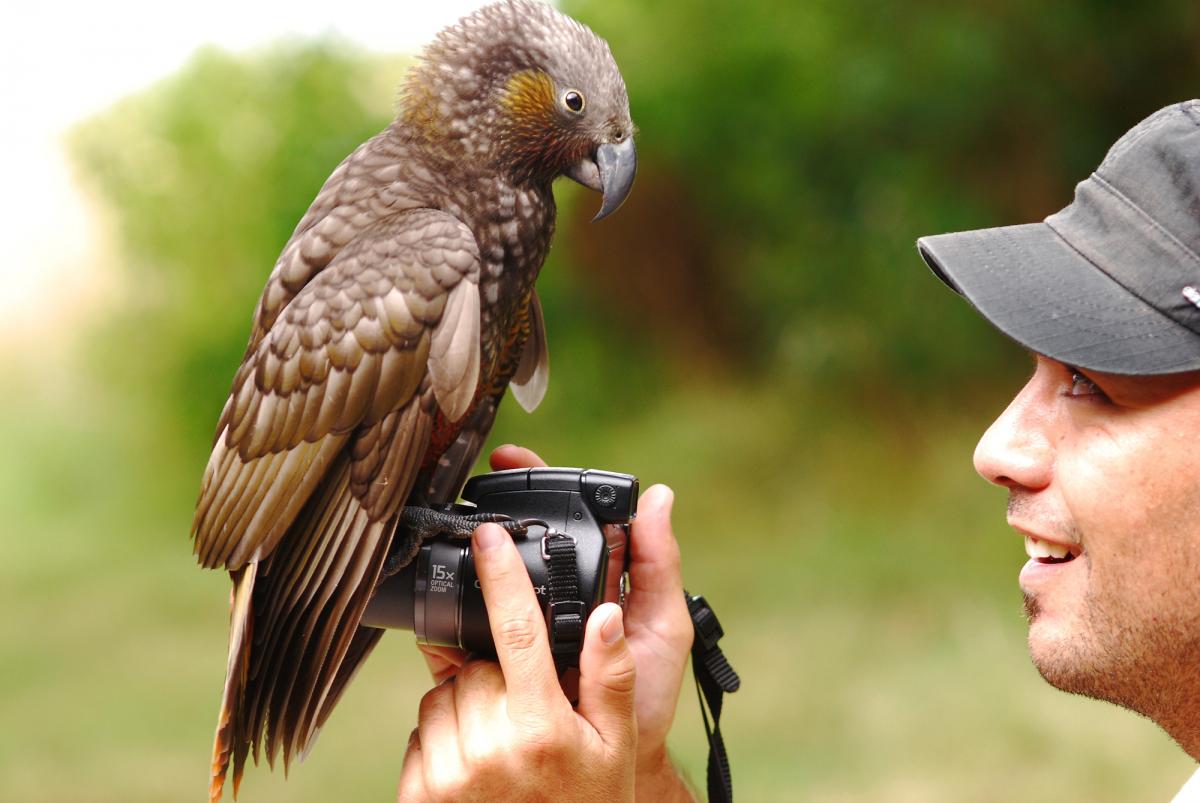
Pictures of the Kaka
click on photos to see full view